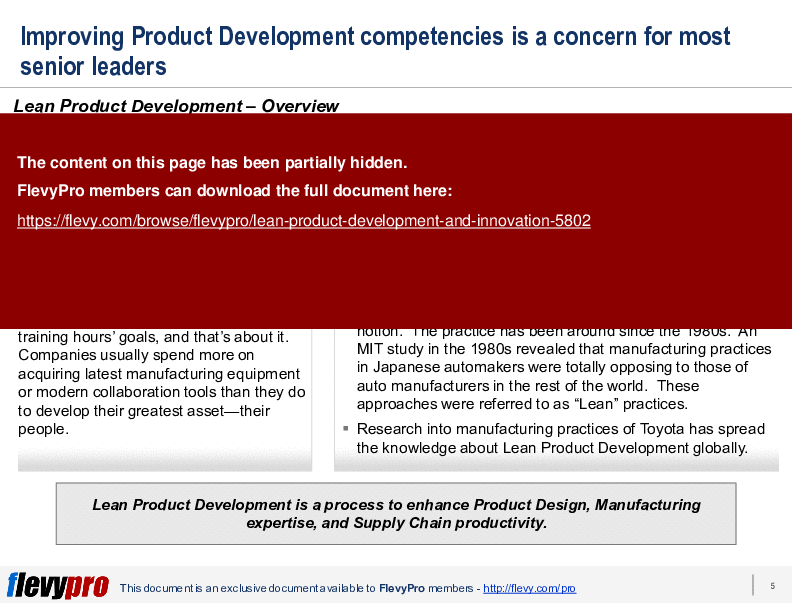

Organizations are eager to understand Lean principles and practices and their impact on enhancing creativity, reducing costs, and raising the quality bar. However, their approach to developing human resources does not go beyond staffing the cream from the leading global educational institutes and sending their people to attend workshops. Companies usually spend more on acquiring latest manufacturing equipment or modern collaboration tools than they do to develop their greatest asset—their people.
Lean Product Development concept isn't a new notion. The practice has been around since the 1980s. An MIT study in the 1980s revealed that manufacturing practices in Japanese automakers were totally opposing to those of auto manufacturers in the rest of the world. These approaches were referred to as "Lean" practices.
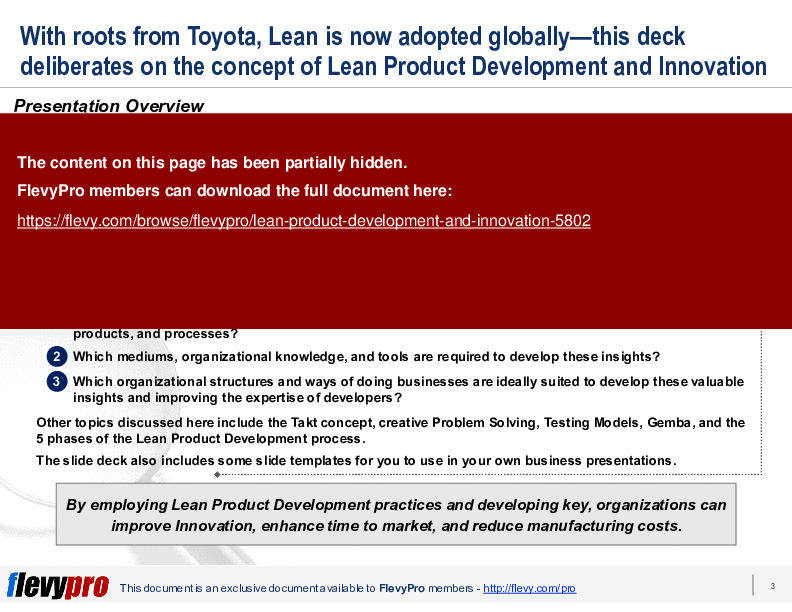
By employing Lean Product Development practices and developing key, organizations can improve Innovation, enhance time to market, and reduce manufacturing costs.
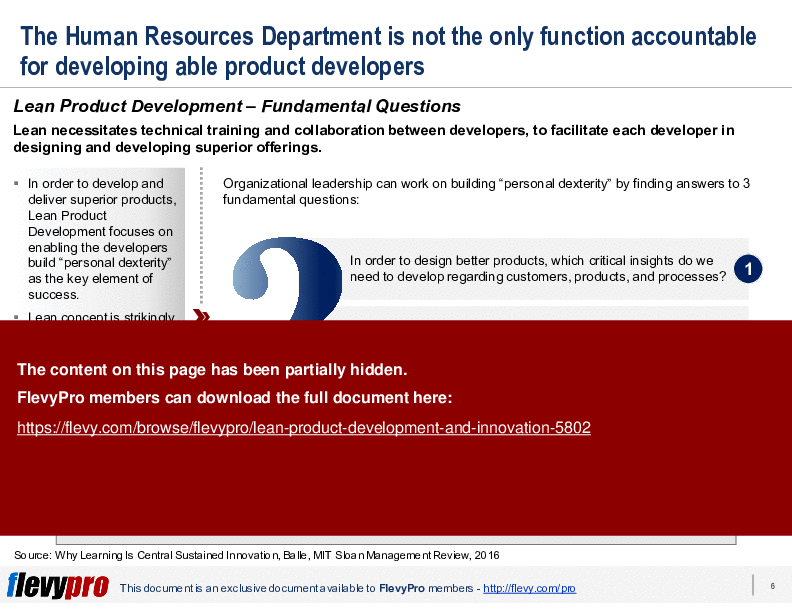
This presentation provides a detailed overview of the 3 fundamental questions that leadership should seek answers to before embarking on the Lean Product Development journey:
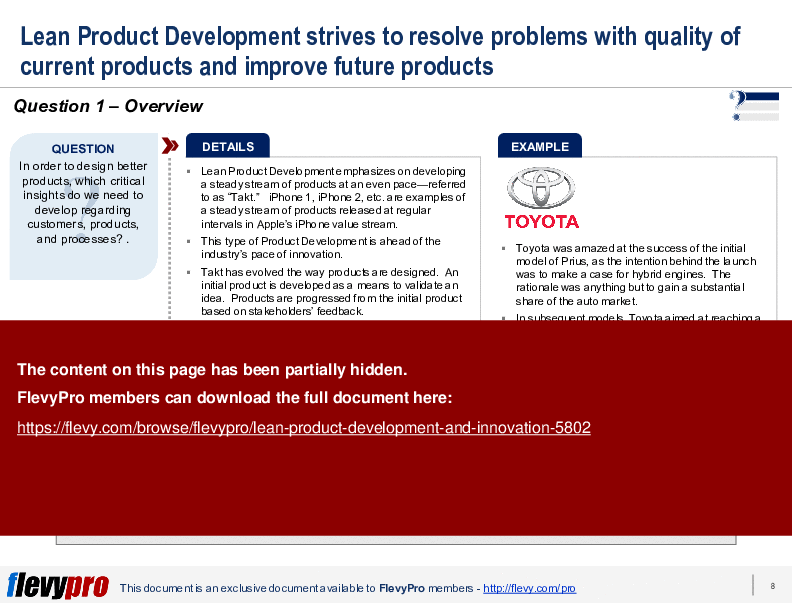
1. In order to design better products, which critical insights do we need to develop regarding customers, products, and processes?
2. Which mediums, organizational knowledge, and tools are required to develop these insights?
3. Which organizational structures and ways of doing businesses are ideally suited to develop these valuable insights and improving the expertise of developers?
Other topics discussed here include the Takt concept, creative Problem Solving, Testing Models, Gemba, and the 5 phases of the Lean Product Development process.
The slide deck also includes some slide templates for you to use in your own business presentations.
The presentation emphasizes the importance of "Action Learning" and underscores the significance of technical problem-solving skills. It also highlights the role of standards in enabling development teams to make optimal choices based on past experiences.
Got a question about this document? Email us at flevypro@flevy.com.
Executive Summary
The Lean Product Development & Innovation presentation is designed to equip organizations with methodologies to enhance creativity, reduce costs, and improve product quality. Rooted in the principles established by Toyota, this framework emphasizes a culture of continuous improvement and effective collaboration among developers. By addressing critical insights regarding customers, products, and processes, this deck guides leaders through the Lean Product Development journey, ensuring that they can effectively implement Lean practices to drive innovation and operational excellence.
Who This Is For and When to Use
• Product Development Teams focused on enhancing design and manufacturing processes
• Senior Leaders aiming to foster a culture of continuous improvement
• Innovation Managers seeking to streamline product development cycles
• Human Resources professionals involved in talent development for product designers
Best-fit moments to use this deck:
• During strategic planning sessions for product innovation initiatives
• When launching new product lines or enhancing existing offerings
• For training sessions aimed at improving team collaboration and problem-solving skills
Learning Objectives
• Define the key insights necessary for effective product design
• Build a framework for continuous improvement in product development
• Establish organizational structures that support Lean practices
• Identify tools and mediums that enhance collaborative learning
• Develop a comprehensive understanding of the Lean Product Development phases
• Create actionable plans for implementing Lean methodologies in product design
Table of Contents
• Overview (page 3)
• Lean Product Development (page 5)
• Question 1 (page 8)
• Question 2 (page 10)
• Question 3 (page 15)
• Templates (page 20)
Primary Topics Covered
• Lean Product Development Overview - An introduction to Lean principles and their application in product development, emphasizing continuous improvement and operational excellence.
• Critical Insights for Product Design - Identifying essential insights regarding customers, products, and processes to enhance product offerings.
• Action Learning in Development - The importance of collaborative learning and problem-solving in enhancing product quality and efficiency.
• Standards in Product Design - Establishing design and manufacturing standards to guide product development and ensure quality.
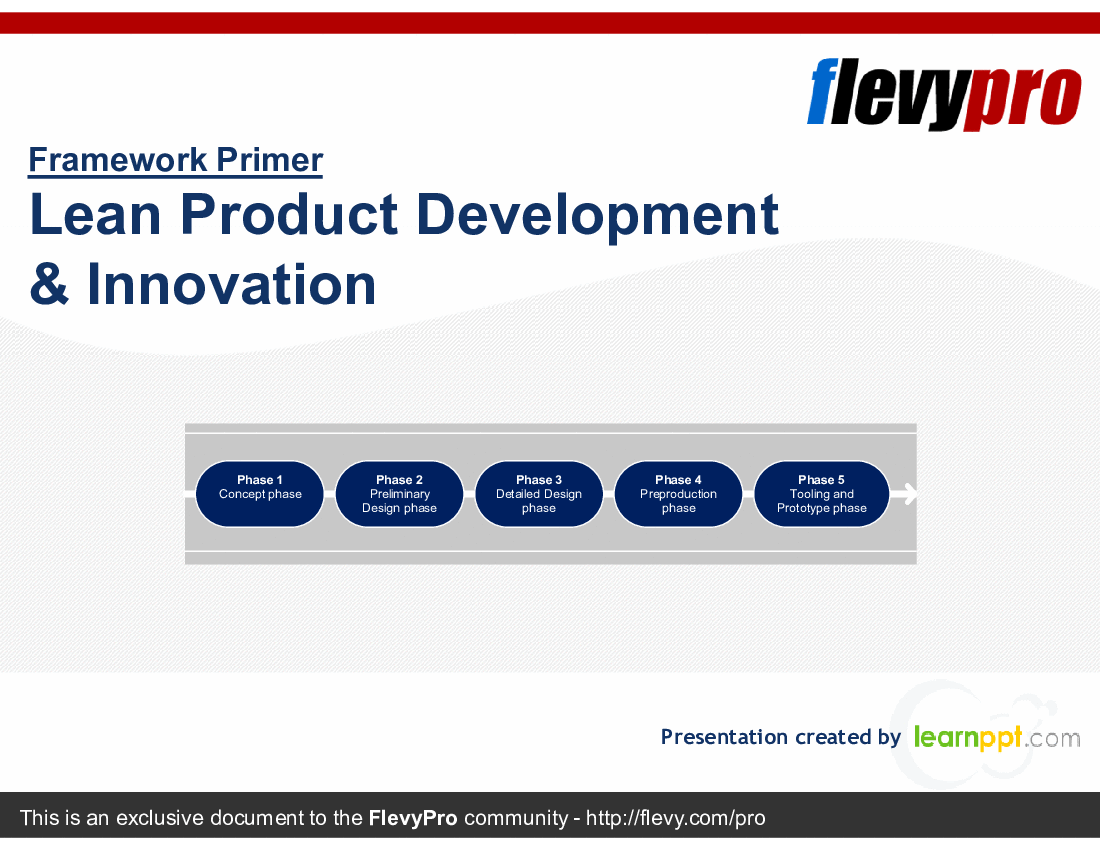
• Phases of Lean Product Development - A detailed exploration of the 5 phases: Concept, Preliminary Design, Detailed Design, Preproduction, and Tooling and Prototype.
• Creative Problem Solving - Techniques for innovative problem-solving that empower developers to explore multiple solutions.
Deliverables, Templates, and Tools
• Framework for identifying critical insights in product development
• Template for establishing design and manufacturing standards
• Action Learning plan template for collaborative team development
• Overview of the 5 phases of Lean Product Development
• Creative problem-solving toolkit for product designers
• Slide templates for presenting Lean Product Development concepts
Slide Highlights
• Overview of Lean Product Development principles and their historical context
• Visual representation of the 5 phases of Lean Product Development
• Case studies illustrating successful Lean implementations in product design
• Templates for capturing critical insights and standards in product development
• Examples of collaborative learning frameworks in action
Potential Workshop Agenda
Introduction to Lean Product Development (30 minutes)
• Overview of Lean principles and their relevance to product development
• Discussion of the importance of continuous improvement
Critical Insights Workshop (60 minutes)
• Identify and analyze critical insights for effective product design
• Group activity to develop actionable insights based on real-world scenarios
Action Learning Session (90 minutes)
• Explore collaborative learning techniques and problem-solving approaches
• Develop a plan for implementing Lean practices within teams
Customization Guidance
• Tailor the framework to align with specific organizational goals and product lines
• Adjust the templates to reflect unique standards and processes within the organization
• Incorporate company-specific case studies to enhance relevance during training sessions
Secondary Topics Covered
• The role of leadership in fostering a culture of continuous improvement
• Techniques for effective collaboration among cross-functional teams
• The impact of Lean practices on supply chain productivity
• Strategies for enhancing talent development in product design
Topic FAQ
Document FAQ
These are questions addressed within this presentation.
What is Lean Product Development?
Lean Product Development is a methodology focused on enhancing product design and manufacturing processes through continuous improvement and collaboration.
How can this framework improve our product development process?
By implementing Lean practices, organizations can reduce costs, enhance creativity, and improve product quality through structured methodologies.
What are the key phases of Lean Product Development?
The 5 phases are Concept, Preliminary Design, Detailed Design, Preproduction, and Tooling and Prototype.
How does Action Learning fit into Lean Product Development?
Action Learning emphasizes collaborative problem-solving and real-time learning, which are essential for improving product quality and team efficiency.
What tools are included in this presentation?
The presentation includes templates for critical insights, standards, and action learning plans to facilitate effective implementation of Lean practices.
Can this framework be customized for our specific needs?
Yes, the framework can be tailored to align with your organization's goals, product lines, and unique processes.
What is the role of leadership in Lean Product Development?
Leadership plays a crucial role in fostering a culture of continuous improvement and supporting the implementation of Lean practices across teams.
How do we measure the success of Lean Product Development initiatives?
Success can be measured through improved product quality, reduced time to market, and enhanced team collaboration and efficiency.
Glossary
• Lean Product Development - A methodology focused on enhancing product design and manufacturing through continuous improvement.
• Action Learning - A collaborative learning approach where teams learn by solving real-life problems.
• Standards - Established guidelines that govern design and manufacturing processes.
• Takt Time - The pace at which products must be completed to meet customer demand.
• Gemba - A Lean concept referring to the practice of observing processes in their actual context to gain insights.
• Continuous Improvement - An ongoing effort to improve products, services, or processes.
• Prototyping - The process of creating an early model of a product to test concepts and functionality.
• Value Stream - The series of steps that an organization takes to deliver a product or service to customers.
• Cross-Functional Teams - Teams composed of members from different departments working together towards a common goal.
• Problem Solving - The process of identifying solutions to specific issues or challenges.
• Product Lifecycle - The stages a product goes through from conception to retirement.
• Customer Insights - Understanding customer needs and preferences to inform product development.
• Innovation - The process of translating an idea or invention into a good or service that creates value.
• Supply Chain Productivity - The efficiency and effectiveness of the supply chain in delivering products.
• Design Standards - Guidelines that define the criteria for product design and performance.
• Manufacturing Standards - Specifications that outline the capabilities and processes of manufacturing.
• Quality Assurance - The systematic process of ensuring that products meet specified requirements and standards.
• Feedback Loop - A process in which outputs are circled back and used as inputs for future actions.
• Stakeholder Engagement - The process of involving individuals or groups that have an interest in the outcome of a project.
• Innovation Management - The discipline of managing processes in innovation.
• Product Design - The process of creating a new product to be sold by a business to its customers.
• Team Collaboration - The process of working together to achieve a common goal.
Source: Best Practices in Innovation, Lean Management, Product Management PowerPoint Slides: Lean Product Development & Innovation PowerPoint (PPTX) Presentation Slide Deck, LearnPPT Consulting
Did you need more documents?
Consider a FlevyPro subscription from $39/month. View plans here.
For $10.00 more, you can download this document plus 2 more FlevyPro documents. That's just $13 each.
This document is available as part of the following discounted bundle(s):
Save %!
Product Innovation Frameworks
This bundle contains 3 total documents. See all the documents to the right.

|
Download our FREE Strategy & Transformation Framework Templates
Download our free compilation of 50+ Strategy & Transformation slides and templates. Frameworks include McKinsey 7-S, Balanced Scorecard, Disruptive Innovation, BCG Curve, and many more. |